Jai BoekhoutUX & Product Design
Back to Work
13 — ARDUINO

Rebuilding a childhood labyrinth game: an Arduino-powered prototype

Personal Project
ArduinoPrototypingIndustrial Design

Summary

A hands-on prototyping project that reimagines a childhood labyrinth toy as a working, Arduino-controlled game. Built from scratch in a castle theme with six escalating levels, it combines laser-cut fabrication, custom electronics, and hand-built mechanisms controlled through a repurposed PlayStation joystick.

Role

Role

Concept, Industrial Design, Electronics & Fabrication (Personal Project)

Client

Personal Project

Platform

Physical installation, built on an Arduino Mega 2560

Scope

Concept design, CAD & laser-cut fabrication, electronics and motor control, level design, prototyping
Rebuilding a childhood labyrinth game: an Arduino-powered prototype

Project Detail

Every kid who grew up with a labyrinth toy knows the drill: tilt the board, guide the ball through the maze, and try not to lose it down one of the holes. After finding my old one tucked away in a drawer, I decided to build a 2.0 version.

Using the original as a starting point, I designed and built a prototype labyrinth game with secret hidden keys that unlock doors and levels as you find them. Instead of the two physical dials you'd normally turn between your fingers, I programmed a PlayStation controller to steer the board digitally.

Process

The Game

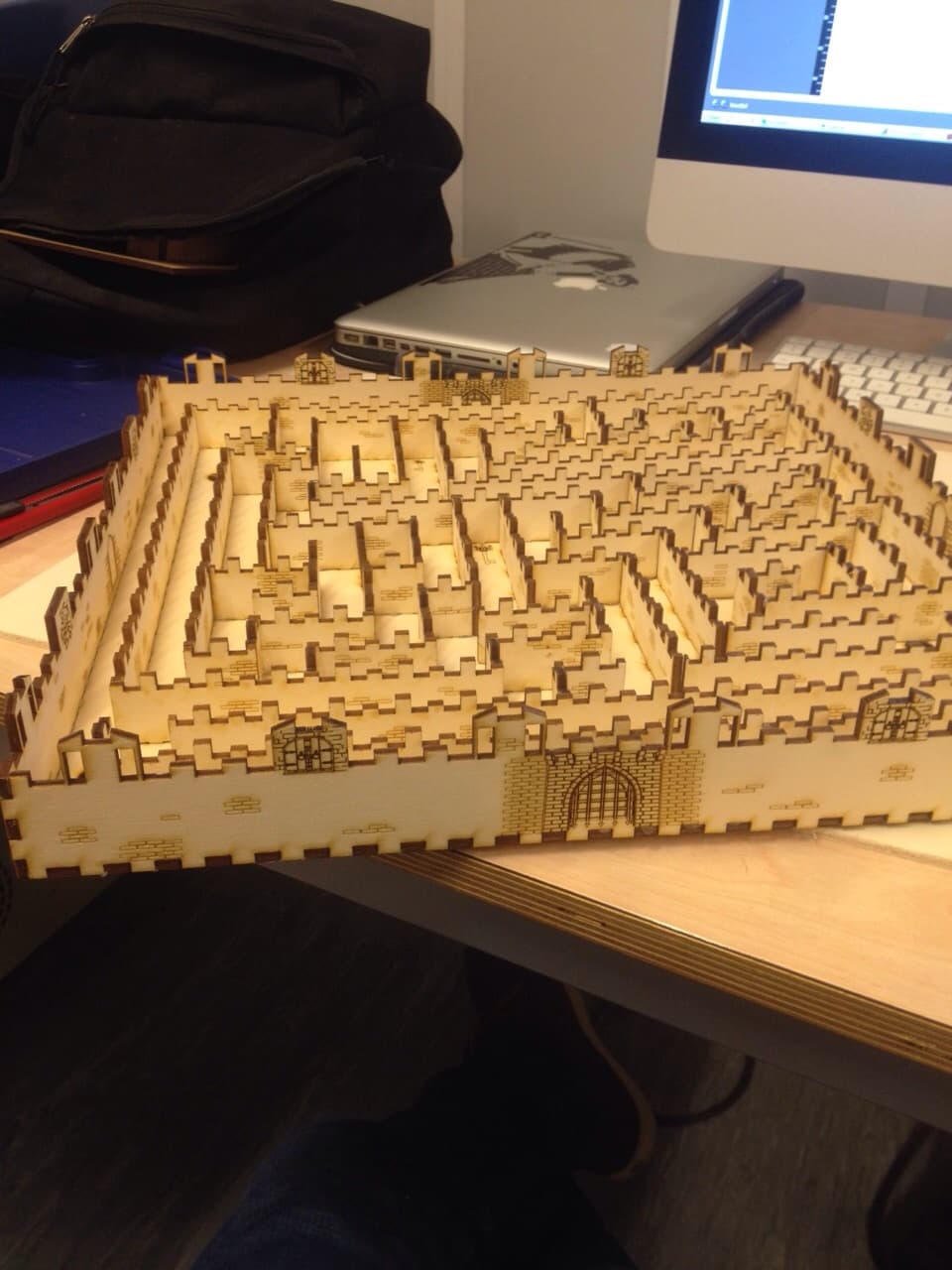
The finished build is a castle-themed puzzle with six levels. Each one hides a key icon on the board, finding it triggers a timer and opens a door.

Level 1: the first door stays open until the game is reset.
Level 2: both keys must be triggered; the door stays open for 15 seconds before closing automatically.
Level 3: both keys must be triggered; the door stays open for 4 seconds.
Level 4: both keys must be triggered; the door stays open for 3 seconds.
Level 5: one key must be triggered; the door stays open for 3 seconds.
Level 6: all three keys must be triggered within 6 seconds; the door then stays open for 4 seconds.

How Does It Work?

The game runs on an Arduino Mega 2560. A PlayStation controller drives two stepper motors, which in turn power the board's X and Y axes.

The ball itself is a round magnet, with reed switches (magnetically operated switches) hidden beneath each key. The doors are controlled by small SG90 servo motors.

How Is It Made?

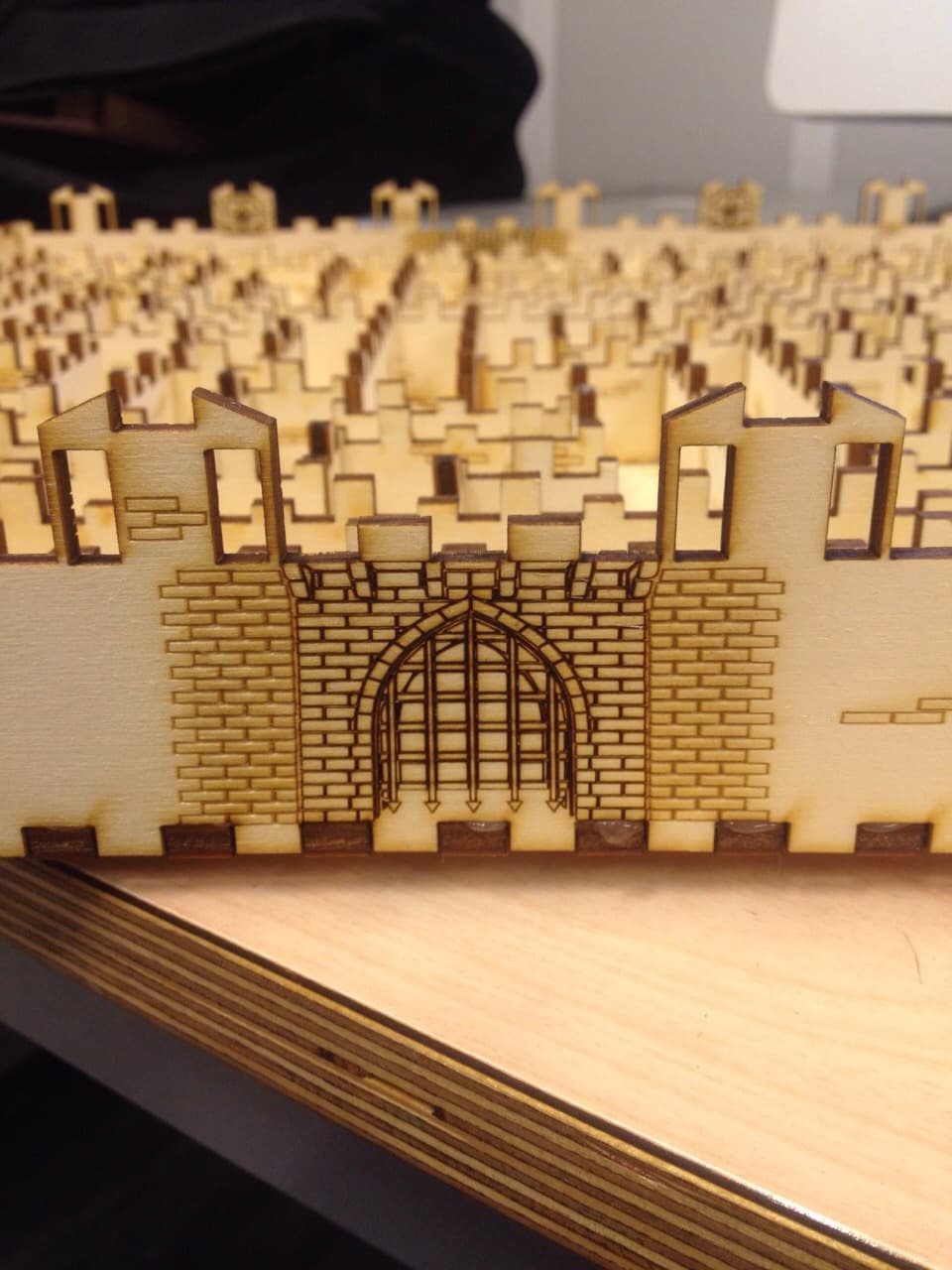
I designed the layout of the castle and walls in Adobe Illustrator, then laser-cut the pieces from 3mm plywood, with the outer frame cut from 9mm plywood for strength.

Every sensor bracket and motor mount was custom-built to fit. The reed switches turned out to be the most sensitive part of the build: too close to the board and the magnet would stick, too far away and the sensor wouldn't trigger at all, so getting that height right took a fair bit of trial and error.
Video of prototype

Key Outcomes

01Designed and laser-cut a complete castle-themed enclosure from 3mm and 9mm plywood
02Built a six-level puzzle sequence with individually timed, key-triggered doors
03Programmed a PlayStation controller to drive the board's stepper motors in place of manual dials
04Solved a tricky sensor-calibration problem by iterating on reed-switch height until detection was reliable
05Turned a childhood toy into a fully working Arduino-controlled prototype, built from scratch

Tags

ArduinoPrototypingIndustrial DesignElectronicsLaser Cutting

View More Projects

Designing 5 user roles into one nationwide arts events platform
UX DesignOOUX

Designing 5 user roles into one nationwide arts events platform

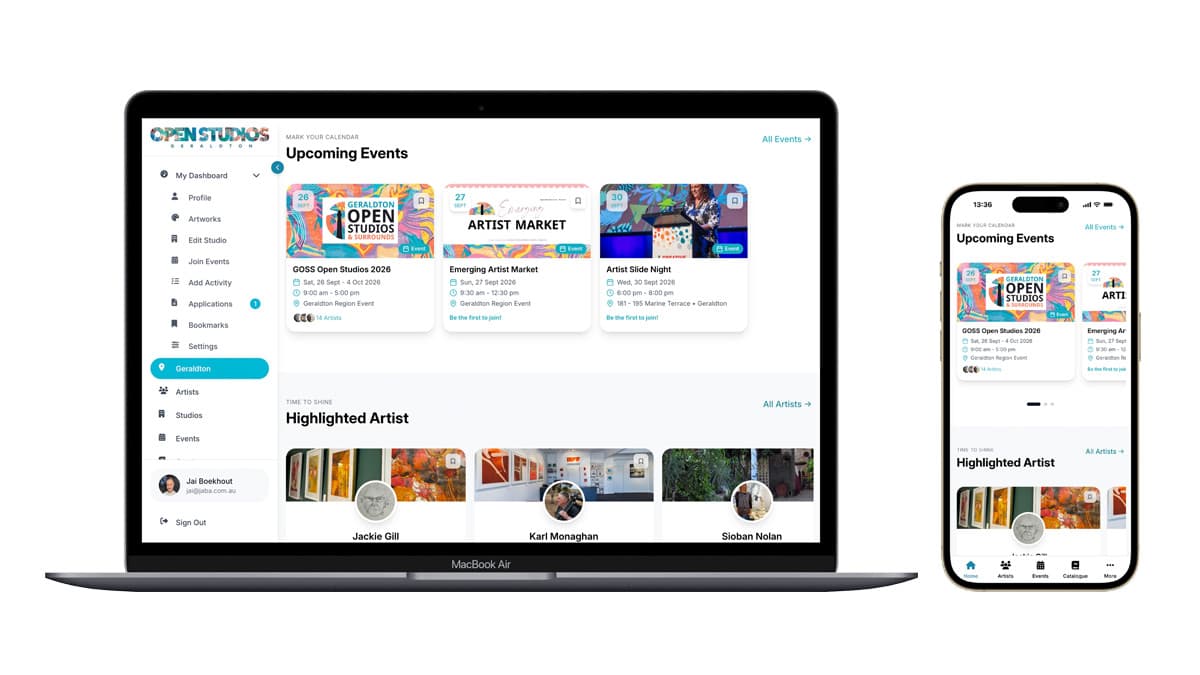
Open Studios Australia is a nationwide digital platform designed to connect visitors with artists, studios and creative events across the country. The project reimagines the traditional Open Studios experience with a centralised, mobile-first application where people can discover local creative communities, explore studios, attend activities and workshops, and browse curated catalogues. My role covered concept development, user experience design, Object-Oriented UX (OOUX) structuring and interface prototyping, as well as developing the web app using AI-assisted development, with support from JABA's tech team. The platform was built with a strong focus on user experience and accessibility, so visitors, artists, studio owners and licensees all have tools tailored to their needs.
View Project →
SEO-driven website design for an industrial fabrication company
Web DesignUX Design

SEO-driven website design for an industrial fabrication company

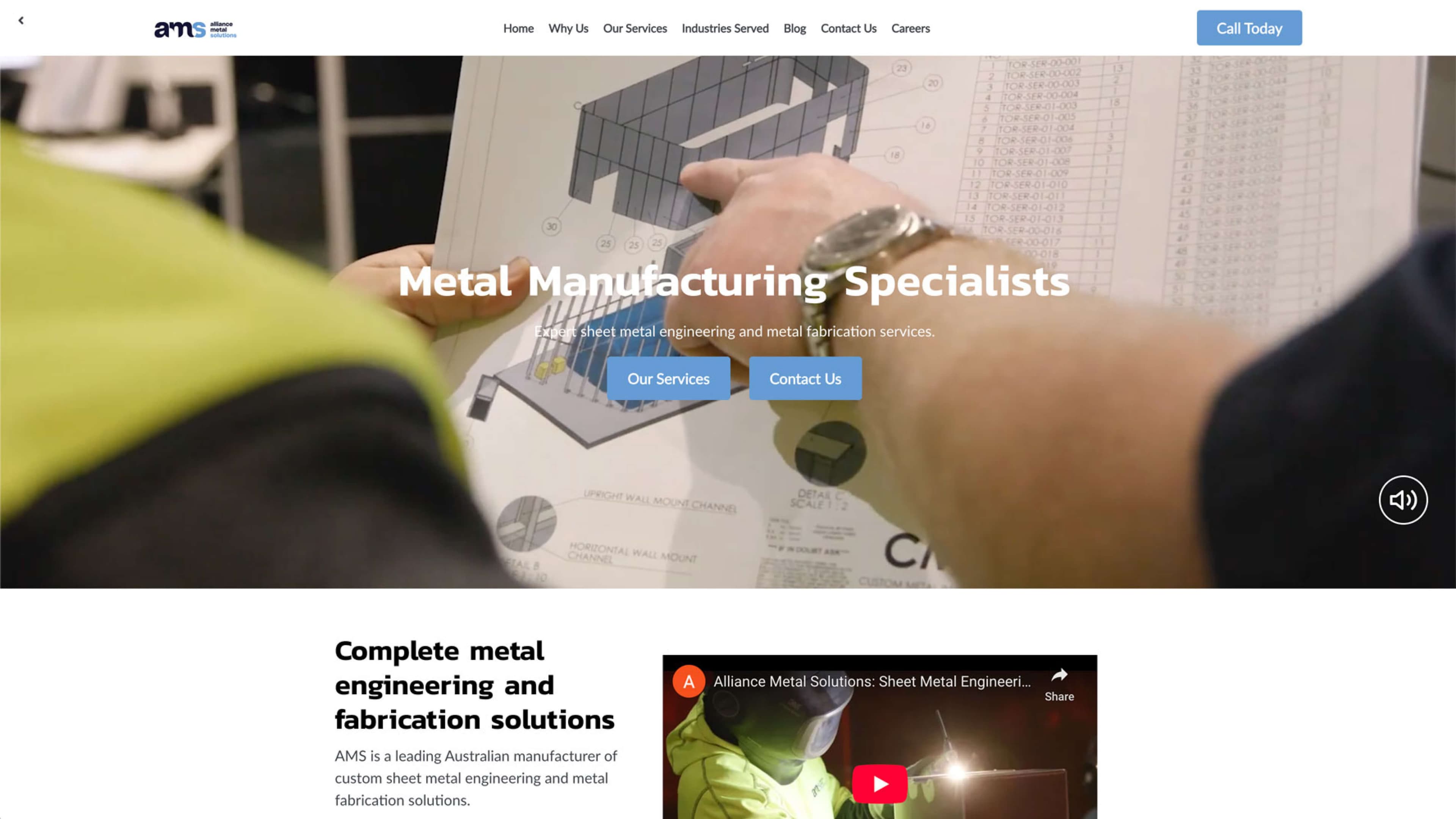
Managed the migration of Alliance Metal Solutions' website from a slow WordPress setup to a fast, easy-to-manage Progressive Web App. The client wanted better performance and simpler content management without changing a thing about the design they already liked.
View Project →
Explaining whole-house water filtration to first-time buyers
Web DesignUX Design

Explaining whole-house water filtration to first-time buyers

Designed and built a website for CT Filtration, an Adelaide-owned whole-house water filtration business. The project focused on helping first-time buyers understand a product they cannot easily visualise, through image-enhanced navigation, a dedicated Benefits page, 3D product walkthrough video produced by a third party was integrated across the product pages and Google Reviews integration.
View Project →