Making sustainable food production easy to understand, one step at a time
Summary
At Avans University I took on a challenge: explain aquaponics, a circular system where fish and plants keep each other alive, to people who had never heard of it. The result was a fully working, mobile aquaponics system designed for exhibitions. It came with an 8-step self-guided tour, live sensor readings, illustrated diagrams, posters and a take-home flyer. The installation concept was later sold to Stichting Duurzame Kost / City Farming Eindhoven.
Role
Role
Research, Concept Development, Information Design, Prototyping & Fabrication (Bachelor thesis)
Client
AVANS University · Aquaponics System – Research & Exhibition Design
Platform
Physical interactive installation (working aquaponics system on wheels), Arduino sensors and live displays, printed signage, posters and flyers
Scope
Desk and field research, system design, technical illustration, prototyping, Arduino sensor programming, user testing, exhibition and signage design, full build
Project Detail
The challenge
Aquaponics combines fish farming with growing plants in water. Fish waste feeds the plants, and the plants clean the water for the fish. It’s a clever system, but it’s invisible to most people. Bacteria, nitrogen cycles and water chemistry don’t exactly sell themselves at an exhibition stand. The challenge was to make all of that understandable to a complete beginner in a few minutes, without a guide standing next to them.
Research
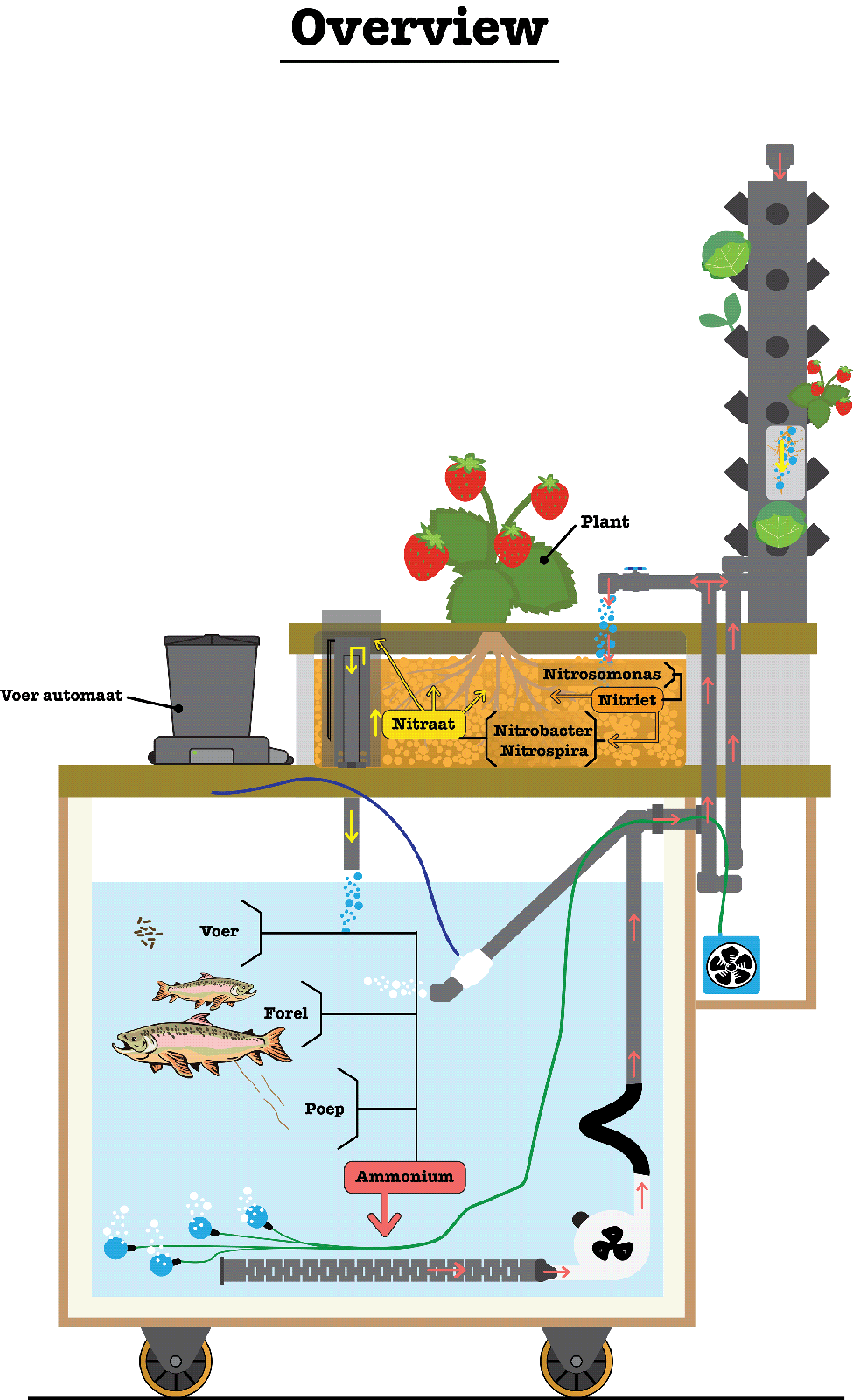
I started with desk research and visits to working aquaponics setups. I wanted to understand every part of the cycle: how fish waste turns into ammonium, how bacteria convert it into nitrite and then nitrate, and how the plants take it up as food. I also explored three growing methods, ebb and flow grow beds, floating rafts and vertical grow towers, so visitors could compare them side by side.
Designing the explanation
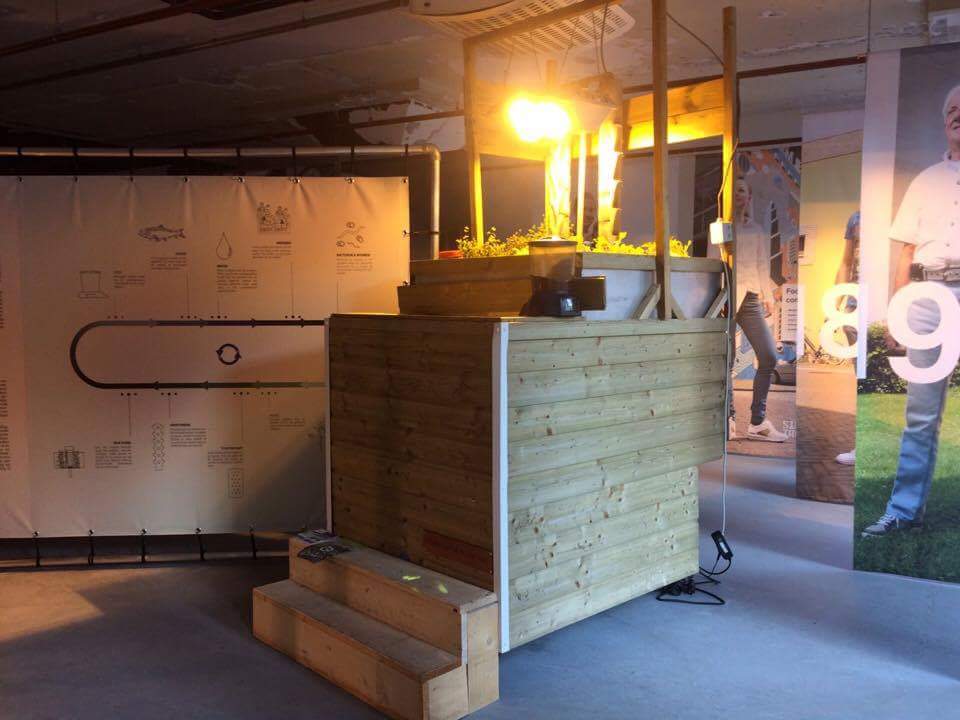
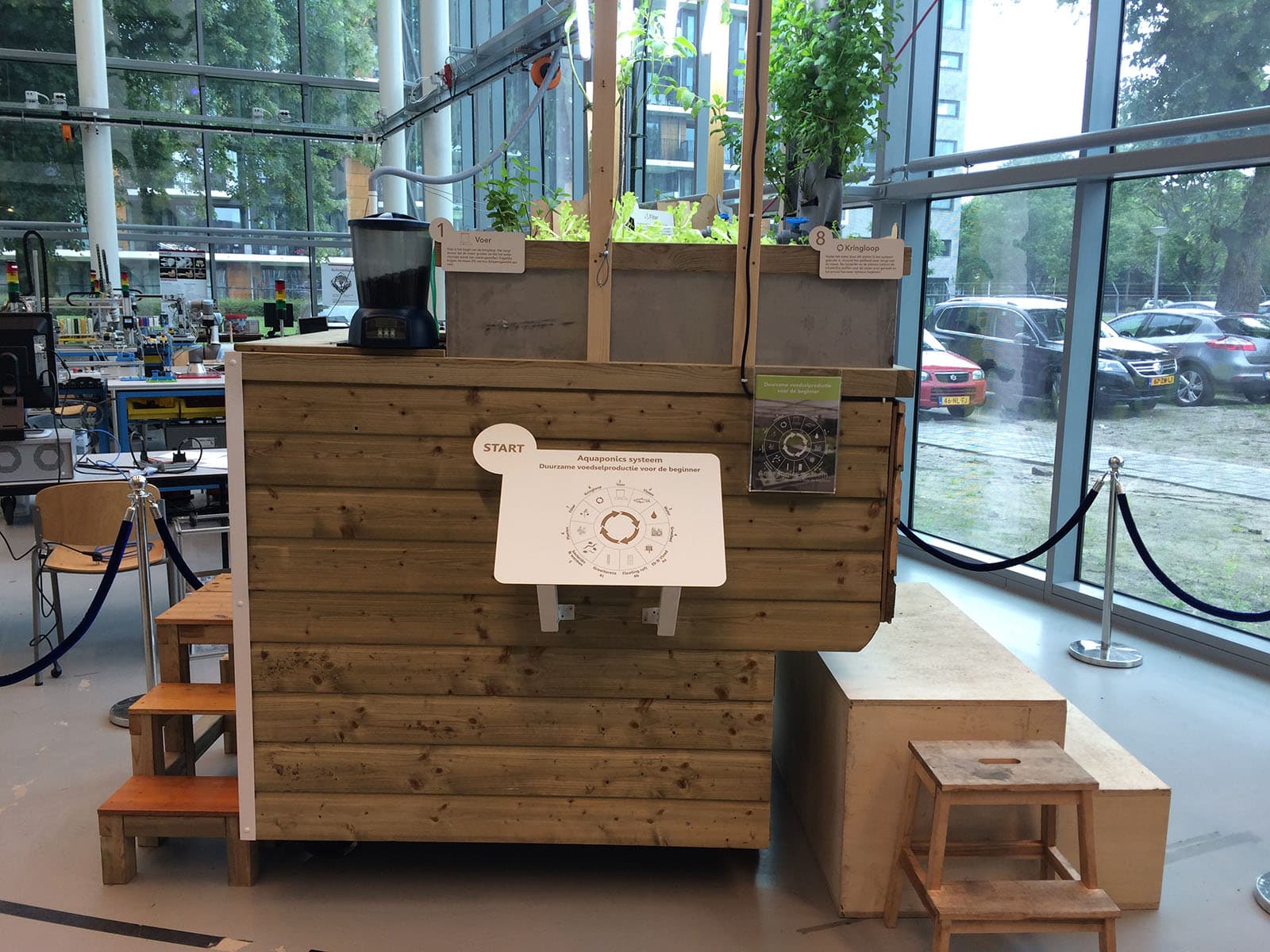
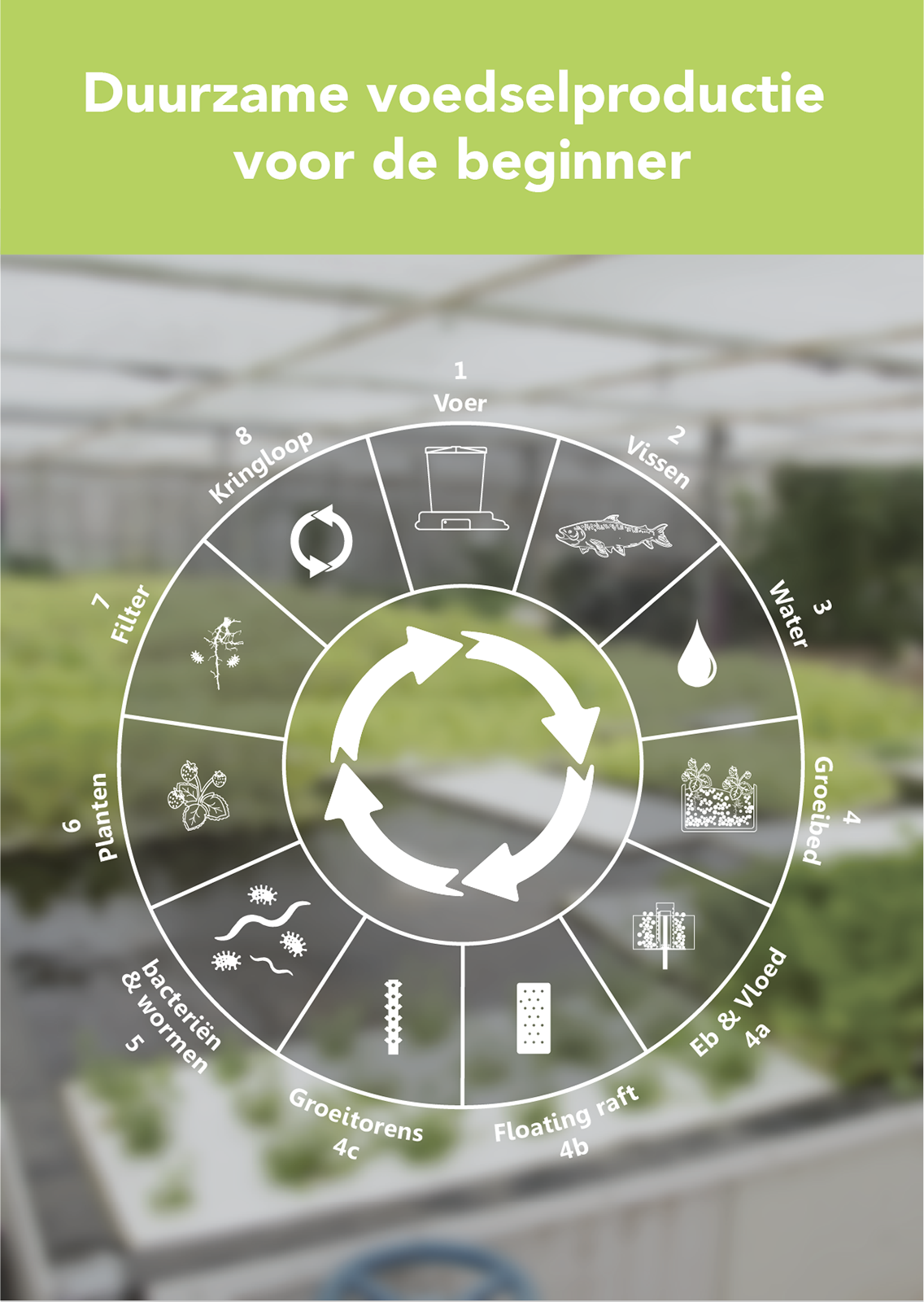
I broke the whole system down into an 8-step cycle: feed, fish, water, grow bed, bacteria and worms, plants, filter, and back round again. That cycle became the backbone of everything. A large “START” sign introduces the cycle as a circular diagram. Numbered signs on each part of the installation then lead visitors around the system in order, so they can follow the process with their own eyes.
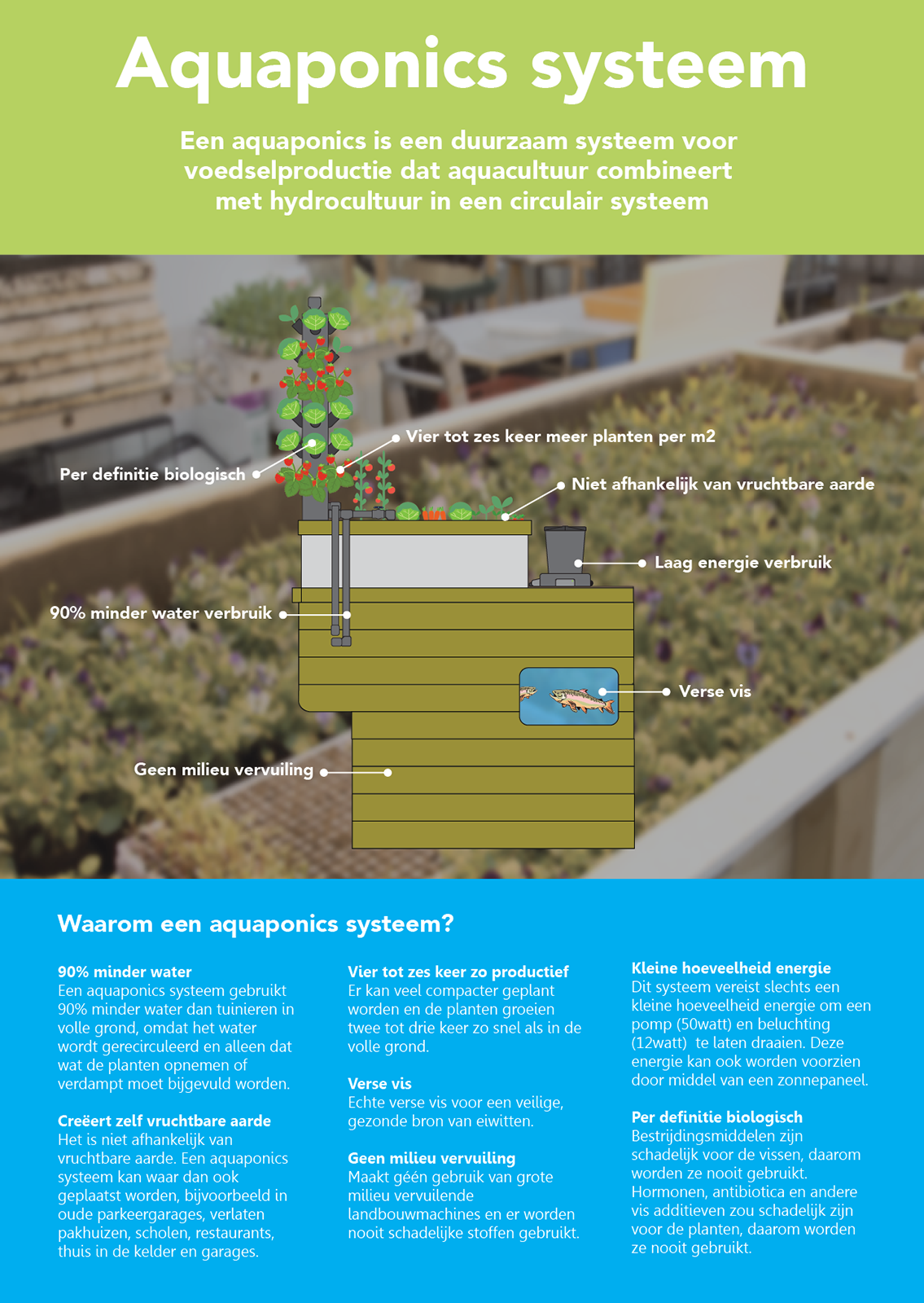
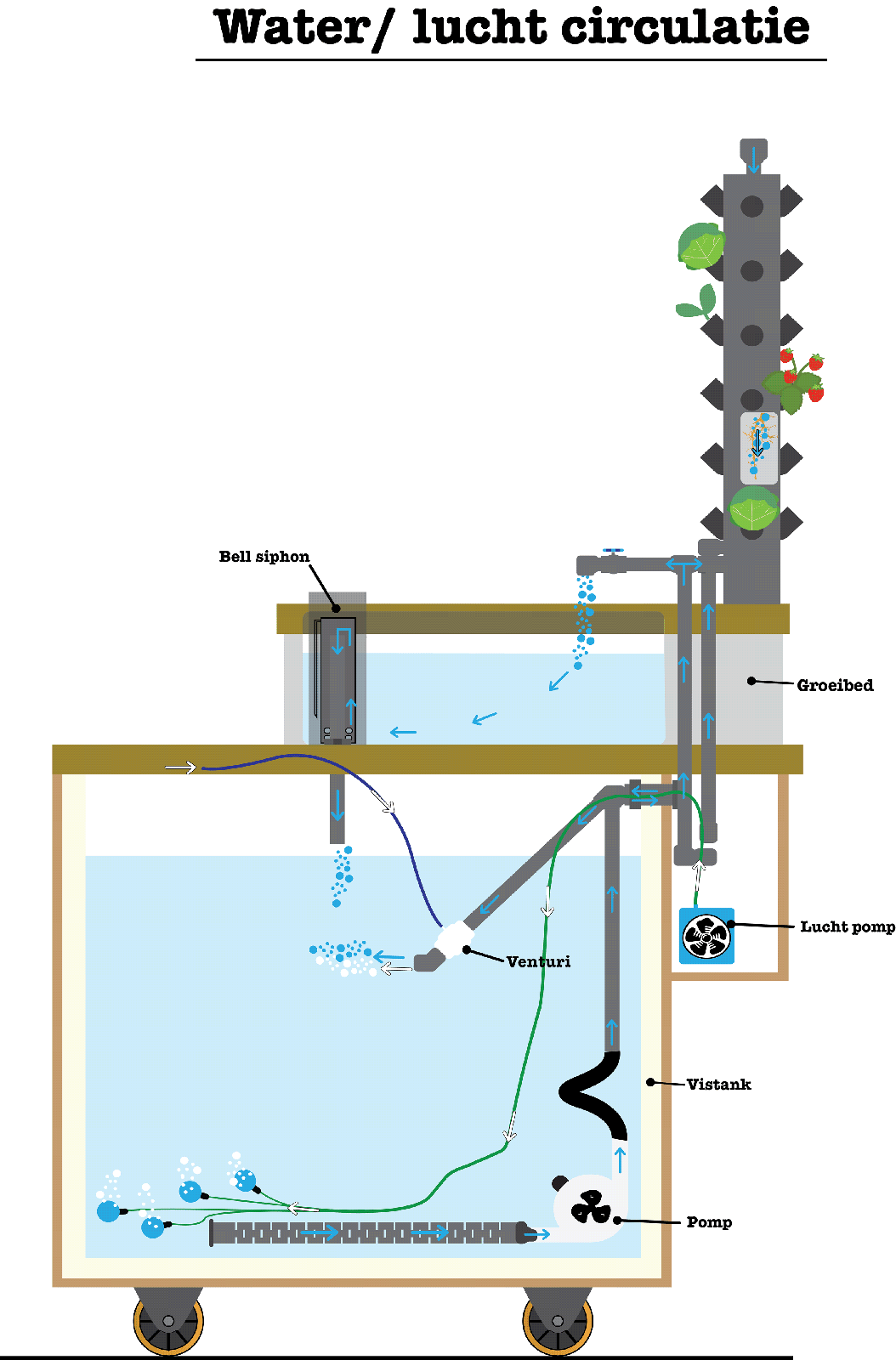
To support it, I illustrated a set of technical diagrams. One shows the nitrogen cycle from fish to plant, and another shows how water and air circulate through the system. I also designed a poster explaining why aquaponics matters: around 90% less water than growing in soil, four to six times more plants per square metre, very low energy use, and no need for fertile ground. Finally, there was a flyer visitors could take home.
Making it live with sensors
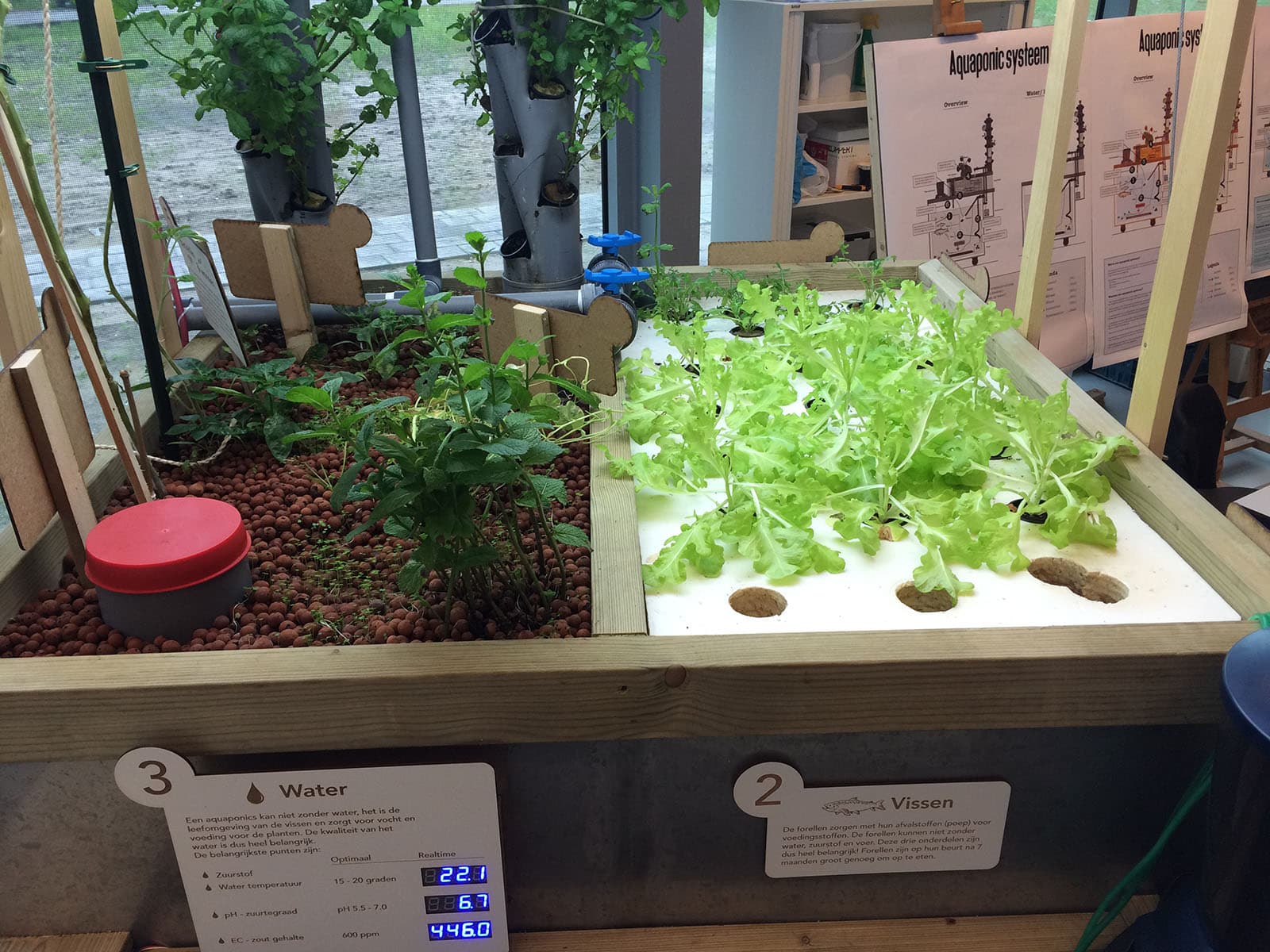
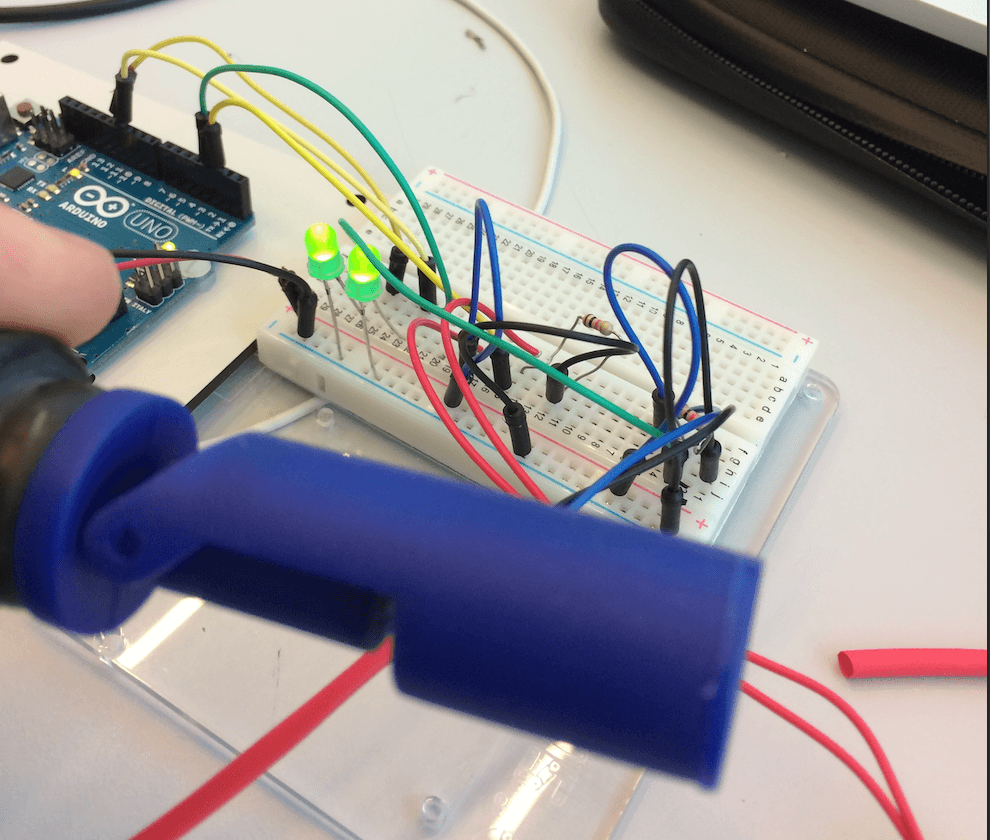
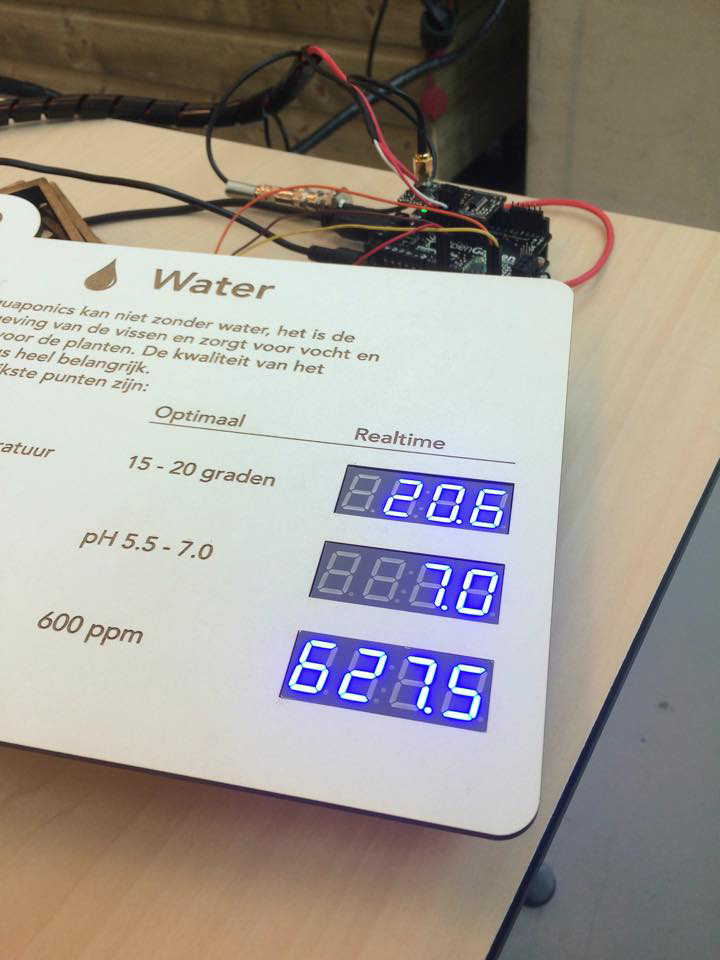
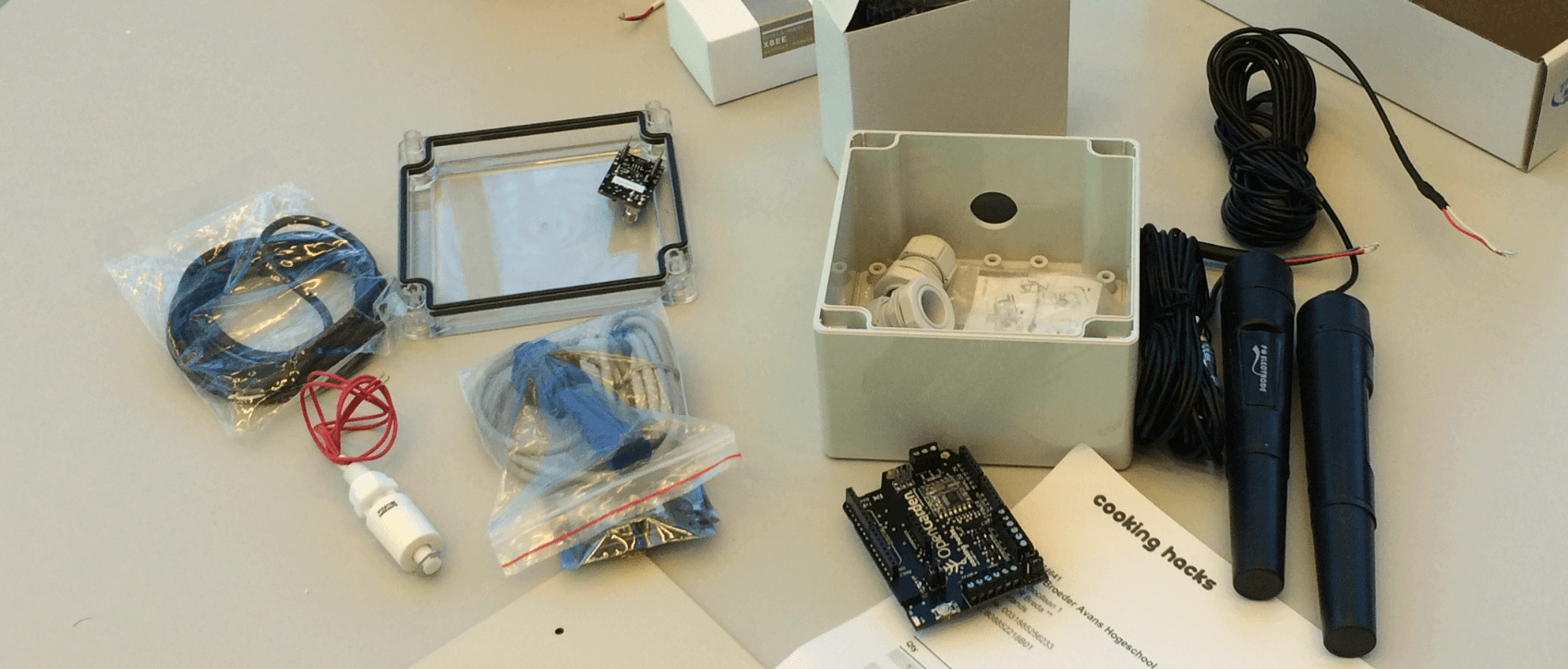
To make the invisible visible, I built a sensor setup with Arduino, using an Open Garden hydroponics kit. I prototyped it first on a breadboard. Live displays on the installation show the real-time water temperature, pH and EC (nutrient level) next to the ideal ranges. Visitors could see straight away whether the system was healthy, which turned an abstract idea into something you could check for yourself.
Building the system
I built the full system from scratch: a timber cabinet on wheels so it could travel between exhibitions, a fish tank with trout, an automatic feeder, a grow bed with a bell siphon for ebb and flow, a floating raft section, vertical grow towers, and a pump and air system to keep everything circulating. Along the way I also designed a larger version based on IBC containers, with a swirl filter and sump tank, and wrote a detailed build guide covering every part, from the bell siphon to the choice of growing media and fish.
Testing and improving
I tested the self-guided tour with visitors and refined the order of the steps, the wording on the signs and the placement of the sensors, until people could walk the cycle on their own and explain it back.
Final outcome
Installation was sold!
The installation on location when it was sold to Stichting Duurzame Kost / City Farming Eindhoven.